Learning Outcomes:
i. Define territorial behavior and explain its significance in animal life.
ii. Explore the diverse ways monkeys and gorillas establish and defend their territories.
iii. Understand the benefits of territorial behavior, including resource access and reproductive success.
iv. Appreciate the complex social dynamics that unfold within animal territories.
Introduction:
Imagine a world where every inch of land is claimed, where boundaries are fiercely guarded, and trespassers face the wrath of the rightful owner. This is the domain of territorial behavior, a fascinating phenomenon where animals mark, defend, and benefit from exclusive control over specific areas. In this lesson, we'll venture into the jungles of monkeys and gorillas, unmasking the secrets of their territorial reign and understanding the critical role it plays in their lives.
i. Marking the Boundaries: The Language of Territorial Claims
Monkeys and gorillas, like many other animals, employ diverse methods to establish their territory:
Scent Marking: They deposit urine, feces, or glandular secretions on trees and other surfaces, leaving a chemical signature that announces their ownership and warns intruders.
Vocal Displays: Loud calls and roars serve as sonic billboards, proclaiming their presence and deterring potential rivals.
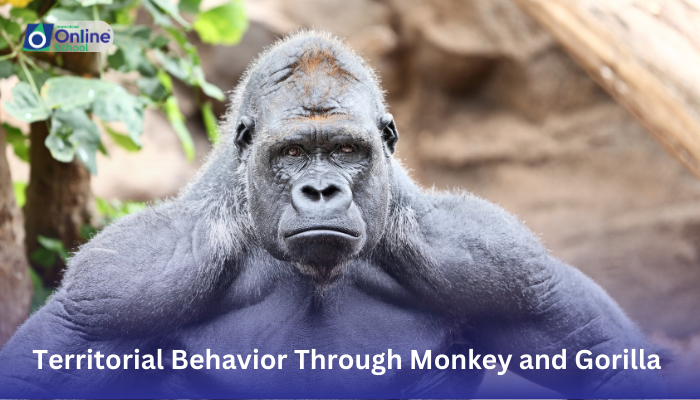
Visual Displays: Puffed chests, bared teeth, and exaggerated body language act as intimidating visual warnings to trespassers.
ii. The Guardians of the Jungle: Defending the Domain
Territorial defense varies depending on the species and the perceived threat. Some monkeys engage in fierce chases, vocal confrontations, and even physical attacks to drive out intruders. Gorillas, known for their impressive size and strength, often display aggressive displays and vocalizations, but physical aggression is typically a last resort. The goal is to assert dominance and discourage conflict, minimizing the risk of injury to both parties.
iii. The Rewards of Ownership: Access and Advantage
Territories are not just ego-boosting claims; they offer tangible benefits:
Resource Security: Access to food, water, and shelter is vital for survival and reproduction. Territories often encompass areas rich in these resources, providing their owners with a reliable source of sustenance.
Reproductive Success: Secure territories offer safe havens for raising young, increasing the chances of offspring survival and ensuring the continuation of the lineage.
Social Hierarchy: The ability to control and defend a territory can elevate an individual's social standing within the group, attracting mates and potentially securing leadership roles.
iv. The Dance of Coexistence: Living Within Boundaries
Territoriality is not a rigid system; it is a dynamic dance of competition and cooperation. Animals may tolerate temporary incursions, share resources with close relatives, and even form alliances to defend against larger threats. The key is to maintain a balance between asserting ownership and promoting peaceful coexistence within the larger social fabric.
Territorial behavior, far from being mere aggression, is a sophisticated strategy for survival and success. By claiming and defending their territories, monkeys and gorillas secure vital resources, increase their reproductive chances, and navigate the complex social dynamics of their groups. Understanding this fascinating aspect of animal life allows us to appreciate the delicate balance between competition and cooperation that shapes the vibrant tapestry of the animal kingdom. So, the next time you hear the booming call of a gorilla or witness a troop of monkeys patrolling their domain, remember that you are witnessing a chapter in the ongoing saga of territorial behavior, a testament to the power of claiming space and the rewards that come with it.
